English
 Türkçe

24/7 Call Center

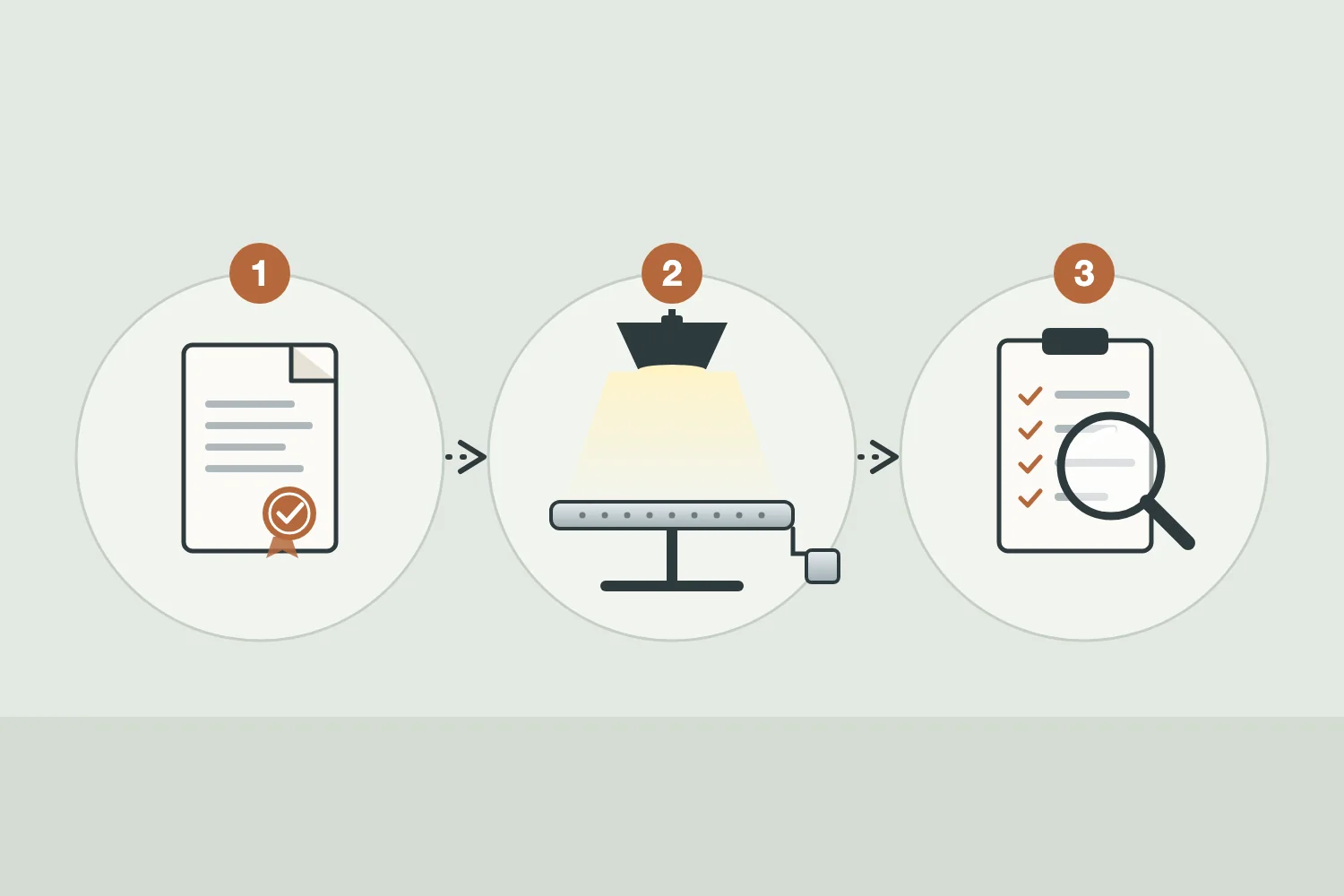
The short answer to «what is an autopsy?» is this: a medical examination of a body to establish the cause, the time and the circumstances of death. The kind carried out within a criminal investigation is a forensic autopsy, and it is regulated by the Turkish Code of Criminal Procedure (CMK, Arts. 86–89). This article summarises the forensic autopsy as the statute lays it out, in a calm and factual tone; the clinical autopsy performed in hospitals is a separate matter and is not covered here.
When does the judicial process begin?
If the physician who examines the body, or the official authorised to issue a burial permit, suspects that the death was caused by unnatural means, the burial permit cannot be issued without first informing the judicial authorities (Regulation on Cemetery Construction, Transfer of Bodies and Burial Procedures, Art. 21). From that notification the matter passes to the judicial authorities, and the autopsy itself is carried out in the presence of the public prosecutor.
Before the autopsy: identification and external examination
Under CMK Art. 86, unless something prevents it, the identity of the deceased is established before the examination or the autopsy, in particular by showing the body to people who knew the person. In the forensic examination all findings are recorded in order to determine the medical signs, the time of death and the cause of death. This examination is carried out in the presence of the public prosecutor, with a physician appointed for the purpose.
Who performs the autopsy?
CMK Art. 87 describes the autopsy as a procedure carried out in the presence of the public prosecutor and lists who performs it:
- Two physicians: one a forensic medicine specialist and the other a pathologist or a member of another specialty; or two physicians one of whom is a general practitioner.
- Where necessary the procedure may be carried out by a single physician; this is stated explicitly in the autopsy report.
- A physician brought by defence counsel or a representative may also be present at the autopsy.
- The physician who treated the person in the illness immediately before death cannot be assigned to perform the autopsy, although he or she may be asked to attend and explain the course of the illness.
What does the autopsy cover?
The statute says that, where the condition of the body allows it, an autopsy must include opening the head, chest and abdomen (Art. 87/2). The body is recorded on camera while the procedures are carried out (Art. 87/5). The text of the article does not list the relatives' consent as a condition.
Two special cases are regulated separately. For a newborn, the forensic examination or autopsy determines whether there were signs of life during or after birth, whether the baby was born at term, and whether it was viable (Art. 88). Where poisoning is suspected, the visible damage to an organ is described when tissue is taken, and suspicious substances found on the body or elsewhere are examined and analysed by the appointed expert (Art. 89).
Autopsy of a buried body
A buried body may be exhumed so that it can be examined or an autopsy can be performed. The decision is made by the public prosecutor during the investigation and by the court during the trial. Unless it would endanger the purpose of the inquiry, or the relative is hard to reach, a relative of the deceased is informed of the exhumation order immediately (CMK Art. 87/4). When a body is exhumed for a forensic autopsy the municipality or the village headman is also informed (Regulation Art. 42).
Suspected infectious disease
For bodies of people suspected to have died of an infectious or epidemic disease, samples may be taken and an autopsy may be performed if the physician considers it necessary (Regulation Art. 40). Washing and transport then follow additional precautions under the instructions of the health authority; for the vehicle side see our article on the mobile body-preparation unit.
Equipment in the autopsy room
The legal texts do not detail the equipment of an autopsy room; that is a matter for institutions and project specifications. We covered what to check when choosing a table in a checklist, in autopsy table specifications. For waiting before and after the examination, see morgue units, and for temperature monitoring morgue refrigerator temperature.
Volinox autopsy tables and morgue equipment
Volinox manufactures autopsy tables and morgue units to suit each institution. For product details and a quotation, reach us through our contact page or on WhatsApp.
Note: the Regulation text dates from 2010 and may have been amended since; the CMK articles were read from the current text on mevzuat.gov.tr. This article is not legal advice; for a specific case, consult the competent chief public prosecutor's office or a lawyer.
Share: WhatsApp
Frequently asked questions
What is an autopsy?
A medical examination of a body to establish the cause, time and circumstances of death. The kind performed within a criminal investigation is called a forensic autopsy and is regulated by CMK Arts. 86–89.
Who performs a forensic autopsy?
Under CMK Art. 87 it is performed in the presence of the public prosecutor by two physicians: a forensic medicine specialist and a pathologist or member of another specialty, or two physicians one of whom is a general practitioner. In case of necessity a single physician may do it, and this is stated in the report.
Is the relatives' consent required?
The text of CMK Art. 87 does not list the relatives' consent as a condition. A decision to exhume a buried body, however, is notified to a relative of the deceased immediately unless that would endanger the inquiry.
Can a buried body be autopsied?
Yes. A buried body may be exhumed to be examined or autopsied; the decision is taken by the public prosecutor during the investigation and by the court during the trial, and the municipality or village headman is informed.
Need a quote or technical details on this topic?Send us your size and capacity requirements and we will help you choose the right solution.
Related articles
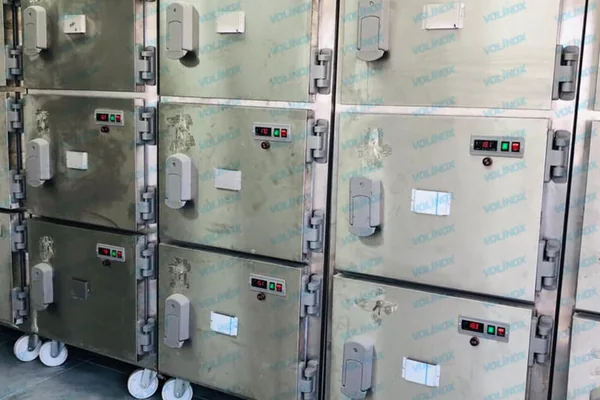
Morgue Refrigerator Temperature: Ranges, Monitoring and Alarms
Typical morgue refrigerator temperatures for short and long-term storage, and how to monitor, log and protect them with alarms and maintenance.
Read more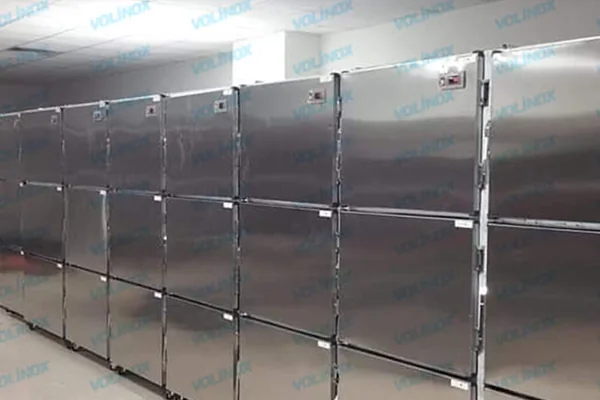
How Long Can a Body Stay in a Morgue? Short vs Long-Term
What determines how long a body stays in a morgue, when freezer storage is needed and how hospitals and municipalities can plan compartment capacity.
Read more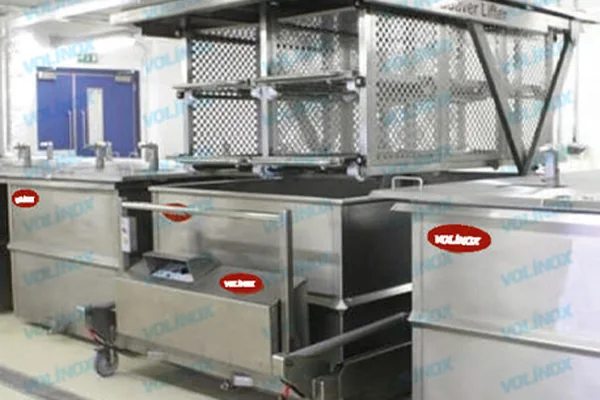
Cadaver Storage Tanks: A Practical Guide for Anatomy Labs
The components of a cadaver storage tank, the criteria for choosing one and the safety principles anatomy laboratories should follow.
Read more
What Is a Crematorium? How Cremation Works and What the Law Says
A crematorium is a facility where a body is burned at high temperature. The process, temperature and duration, and Turkish law on furnaces and ashes.
Read more