English
 Türkçe

24/7 Call Center

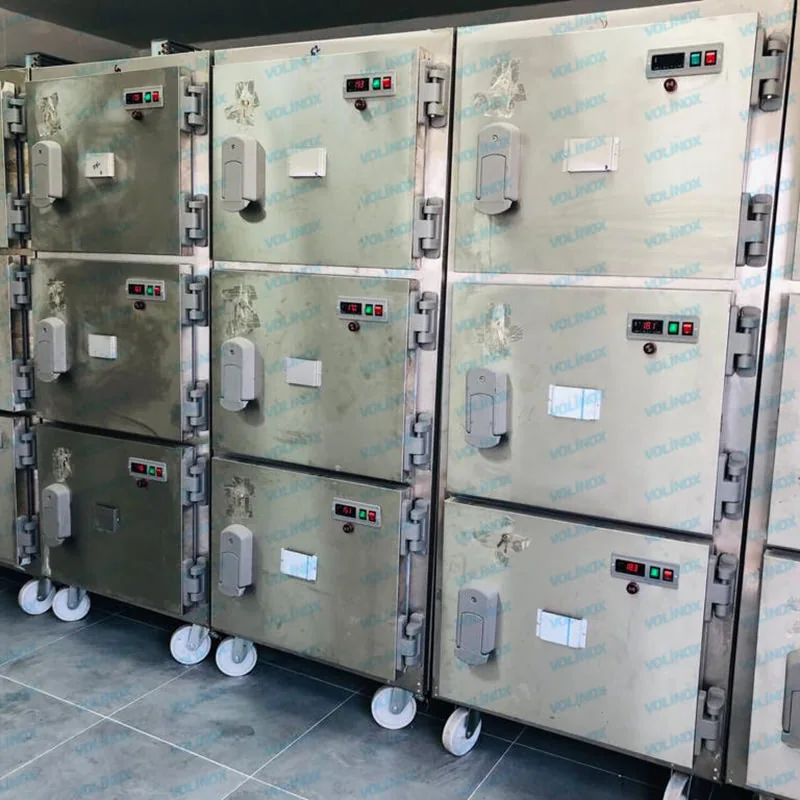
Temperature is the most important technical condition for caring for the deceased with dignity. It is also the question hospital engineers, cemetery departments and washing-room managers ask us most often: what temperature should a morgue refrigerator be? The honest answer depends on how long the body will be kept. This guide covers the usual ranges, how to monitor and record them, which alarms are worth specifying and the maintenance that keeps a unit stable.
Typical ranges for short and long-term storage
Mortuary refrigeration works in two distinct modes. Short-term storage slows decomposition without freezing the body; long-term storage preserves it by freezing. The ranges widely used in the sector are:
| Storage type | Typical range | Typical use |
|---|---|---|
| Short-term (refrigerated compartment) | +2 °C to +4 °C | Waiting for burial, post-mortem examination or transfer |
| Long-term (freezer compartment) | −10 °C to −20 °C or colder | Identification, forensic cases, preparation for long-distance repatriation |
Above +4 °C, decomposition speeds up noticeably. Below 0 °C, a compartment intended for short-term use may partially freeze the body, which can complicate post-mortem work and identification. A refrigerated compartment should therefore hold a narrow, stable band rather than simply run as cold as possible.
What pushes the temperature off target
- Door openings: every opening lets warm air in. Units divided into separate compartments limit the loss to the one door that is opened.
- Insulation and gaskets: the insulation of the body and doors, together with the condition of the seals, decides how long the compressor has to run.
- Room conditions: a unit installed in a hot, poorly ventilated room struggles at the same set point. Leave clearance around the refrigeration unit so air can circulate.
- Loading: air needs room to move above the tray. On Volinox package-type units the clearance between tray and ceiling is specified as 46 cm.
- Cooling method: Volinox states that its units use static cooling, shock cooling and vacuum systems. Shock cooling helps bring the temperature down quickly in the first hours after a body is placed inside.
Monitoring and temperature logs
The right set point is only half the job; the temperature also has to be checked and recorded. Many facilities keep a daily temperature log sheet for every unit. A sound routine includes:
- A digital display and set point for each compartment.
- Readings taken at fixed times, for example at the start and end of every shift, recorded with date, time and signature.
- A written instruction stating who must be informed, and how, when a reading falls outside the agreed range.
- Periodic comparison of the display against an independent, calibrated thermometer.
- Records stored in a form that can be shown during inspections.
Alarms and power cuts
A fault that goes unnoticed overnight or over a weekend can have serious consequences. A high-temperature alarm with sound and light, a door-open warning and, where possible, remote notification should be part of the specification from the start. In areas where power cuts are common, plan a generator connection. A closed, loaded unit holds its cold for a while during an outage, and the most effective way to extend that time is simply to keep the doors shut.
Maintenance that keeps the temperature stable
- Clean dust and dirt from the condenser at regular intervals.
- Inspect door gaskets for tears, hardening and air leaks.
- Make sure the drain line is clear.
- Clean and disinfect interior surfaces with non-abrasive products suitable for stainless steel.
- Have the refrigeration circuit and the temperature controller checked by an authorised technician at least once a year.
Choosing the right unit for your facility
Capacity, storage time and workload should be considered together. A single-body unit may be enough for a village washing room, while a regional hospital or forensic department may need refrigerated and freezer compartments side by side. You can compare the options on our morgue units page, look at the single-body package unit for small sites and the three-tier package unit where more capacity is needed. Where there is no morgue at all, an air-conditioned coffin can provide temporary cooling. For sizing advice, read mortuary cabinet types and sizes; for storage times, see how long a body can stay in a morgue.
To agree the right temperature range and capacity for your project, request a quote through our contact page or send us a message on WhatsApp.
Share: WhatsApp
Frequently asked questions
How cold is a morgue drawer?
A refrigerated morgue drawer or compartment is usually kept between +2 °C and +4 °C. Freezer compartments designed for long-term storage run well below zero, commonly between −10 °C and −20 °C or colder.
Should the morgue room be as cold as the cabinet?
No. The cabinet controls the temperature of the compartment in which the body lies. The room itself should be well ventilated, workable for staff and cool enough for the refrigeration unit to run efficiently; a very hot room makes the cabinet work much harder.
What should a temperature log sheet include?
Date, time, compartment number, measured temperature, set point, any deviation and the action taken, plus the name and signature of the person making the entry. Aligning the sheet with your facility's quality procedures makes inspections easier.
How long does a morgue refrigerator stay cold during a power cut?
It depends on the insulation, the room temperature, how full the unit is and whether the doors are opened, so there is no single figure. If outages are frequent, specify a generator connection and a high-temperature alarm, and keep the doors closed while the power is off.
Need a quote or technical details on this topic?Send us your size and capacity requirements and we will help you choose the right solution.
Related articles
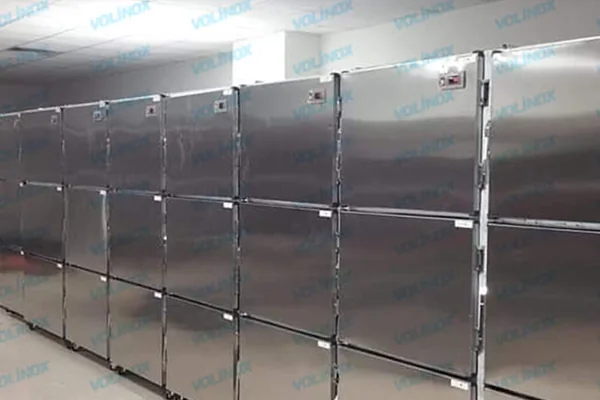
How Long Can a Body Stay in a Morgue? Short vs Long-Term
What determines how long a body stays in a morgue, when freezer storage is needed and how hospitals and municipalities can plan compartment capacity.
Read more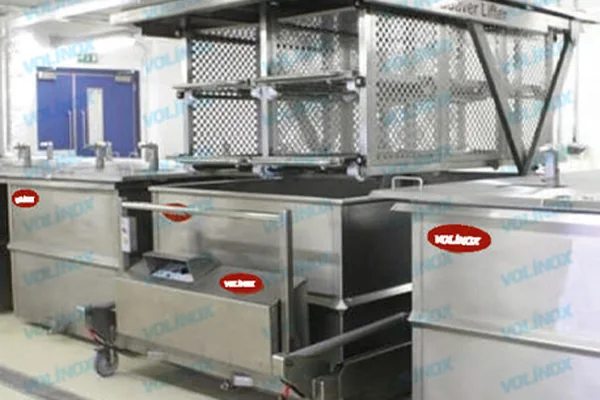
Cadaver Storage Tanks: A Practical Guide for Anatomy Labs
The components of a cadaver storage tank, the criteria for choosing one and the safety principles anatomy laboratories should follow.
Read more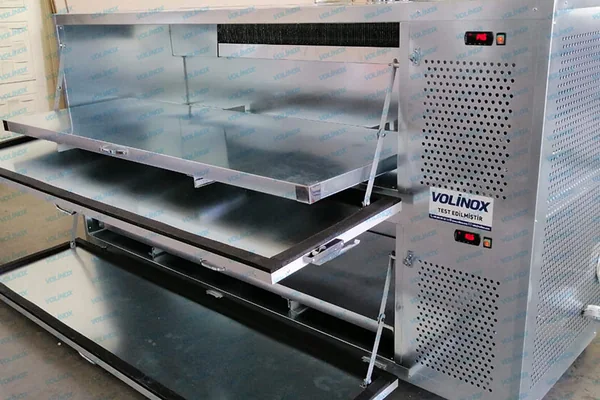
Mortuary Cabinet Types and Sizes: Choosing the Right Capacity
Compare single, two-tier, three-tier and washing-type mortuary cabinets by size and capacity, and see what to measure on site before you place an order.
Read more
Hearse Van Equipment Guide: Choosing a Funeral Transport Vehicle
A practical guide for municipalities and funeral services to hearse van interiors, refrigerated and standard options and a pre-purchase checklist.
Read more