English
 Türkçe

24/7 Call Center

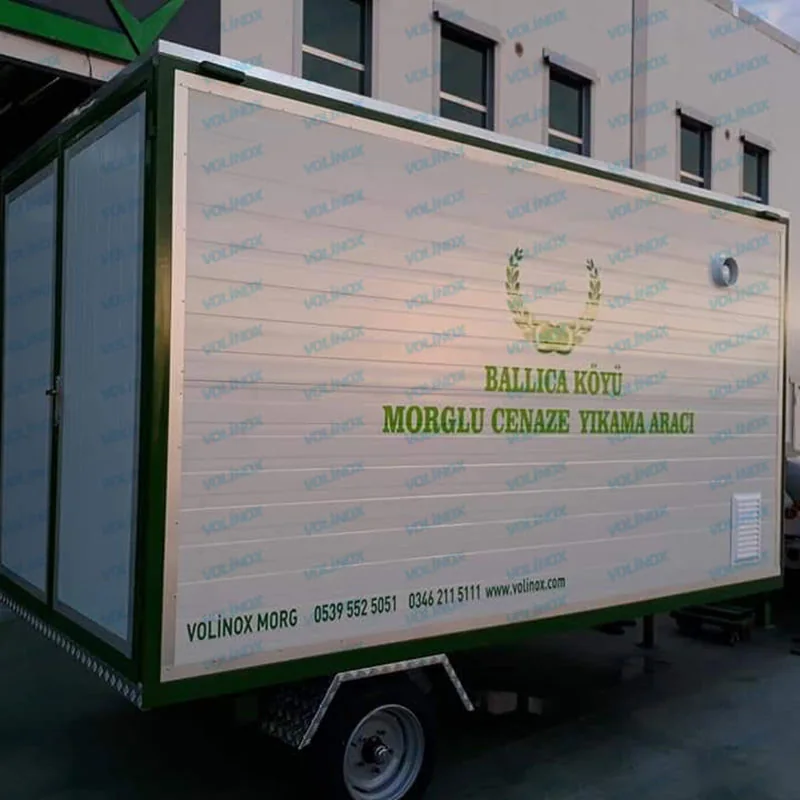
Not every village or neighbourhood has a permanent washing room for the deceased. Families then have to take the body to a nearby town, or the washing is carried out in unsuitable conditions. A mobile funeral washing unit with morgue answers this need by combining the core equipment of a washing room (gasilhane) and a refrigerated morgue unit in one transportable body. In Muslim communities it is often called a mobile ghusl unit.
Who is it for?
- Municipalities serving villages and districts without a permanent washing room
- Cemetery departments covering large rural areas
- Communities where a permanent facility cannot be built next to the mosque or cemevi
- Organisations planning temporary services in disaster areas
- Village service unions and village administrations
What does the unit include?
The equipment listed on the Volinox product page can be grouped as follows:
| Section | Equipment |
|---|---|
| Body and structure | Insulated stainless steel panels with opening windows; hygienic stainless floor; front and rear shutter doors; folding stainless steps |
| Storage and washing | Two-body morgue unit with washing function; stainless washing table and counter with sink; drying and shrouding table; storage cabinet |
| Water and power | Water heater; shower mixer and taps; 200-litre clean water and 200-litre waste water tanks; fully automatic booster pump; power cable and water hose |
| Comfort | Ventilation fan; lighting for the cabin and the morgue compartment |
| Optional | Air conditioning, aluminium raft coffin and generator |
The standard trailer model measures 210 cm wide and 500 cm long, with a body height of 200 cm and an overall height of 290 cm from the ground. Volinox also fits similar equipment to van-based vehicles and states that it can build to custom dimensions.
Trailer or van-based?
A trailer offers a generous working space and can be towed to where it is needed and left there for as long as necessary, which suits village services where equipment is shared between communities. A van-based unit drives itself and may be more agile on narrow rural roads, but it has less interior space and the vehicle cannot be used for anything else while washing is under way. Weigh up local road conditions, whether you have a suitable towing vehicle and how long the unit will usually stay in one place.
Setting up on site
- Park on firm, level ground and leave a clear working area in front of the door and steps.
- Connect the power supply or start the generator, then check the morgue unit's display.
- Make sure the clean water tank is full and the waste tank is empty.
- Switch on the water heater well before washing begins.
- Prepare personal protective equipment: gloves, aprons and boots.
The washing itself follows religious guidance and local custom; the unit's role is to provide a clean, orderly and private space for it.
Hygiene and waste water
Waste water must never be released onto the ground or into a storm drain. Empty the tank at a sewer connection approved by the local authority, then clean and disinfect the tank and hoses. Wipe down the washing table, counter and floor after every use with products suitable for stainless steel. Used gloves, aprons and disposable items should be collected separately and handled in line with waste management rules.
Maintenance and winter care
- Where frost is a risk, drain water lines and tanks after use and protect the heater and pump from freezing.
- Check tyre pressures, brakes and lights before every tow.
- Inspect the morgue unit's condenser and door seals regularly.
- Whenever possible, park the unit under cover.
Related products and articles
You can explore the models on our funeral washing vehicle with morgue and funeral washing vehicles pages. For a permanent room, consider the washing package morgue unit and a stainless ghusl washing table. Our ghusl washing table guide and hearse van equipment guide cover related decisions. For a quote, contact us through our contact page or on WhatsApp.
Share: WhatsApp
Frequently asked questions
How is a mobile ghusl unit different from a washing room?
A washing room is a permanent building, whereas a mobile unit offers the same core functions in a transportable body. In villages without a facility, or far from the nearest one, the unit is taken to where it is needed.
Can the unit work without mains water and electricity?
Yes, as long as the clean water tank is full: the unit has separate clean and waste water tanks and a booster pump. Power comes from a cable connection or the optional generator.
How should the waste water be emptied?
Empty it at a sewer connection approved by the local authority, never onto the ground or into a storm drain. Afterwards, clean and disinfect the tank and hoses.
What should we watch out for in winter?
In areas with frost, drain the water lines and tanks after each use and protect the water heater and pump from freezing. Keep the unit under cover whenever possible.
Need a quote or technical details on this topic?Send us your size and capacity requirements and we will help you choose the right solution.
Related articles
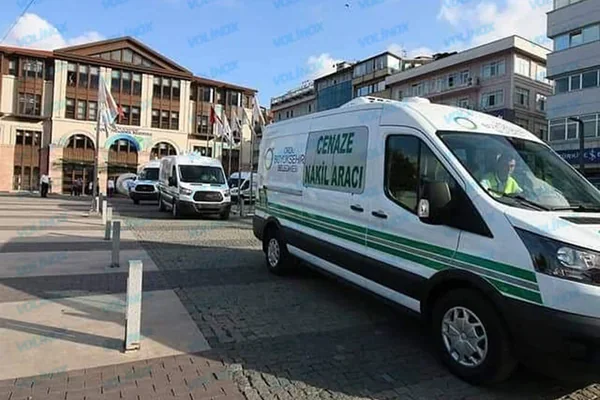
Hearse Van Equipment Guide: Choosing a Funeral Transport Vehicle
A practical guide for municipalities and funeral services to hearse van interiors, refrigerated and standard options and a pre-purchase checklist.
Read more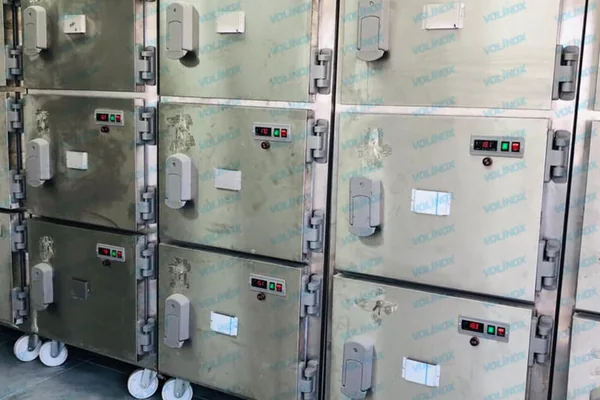
Morgue Refrigerator Temperature: Ranges, Monitoring and Alarms
Typical morgue refrigerator temperatures for short and long-term storage, and how to monitor, log and protect them with alarms and maintenance.
Read more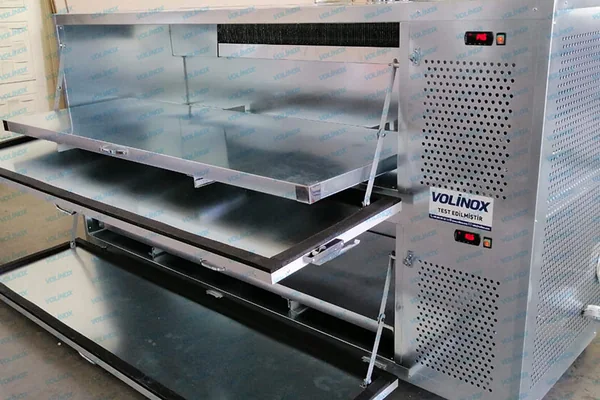
Mortuary Cabinet Types and Sizes: Choosing the Right Capacity
Compare single, two-tier, three-tier and washing-type mortuary cabinets by size and capacity, and see what to measure on site before you place an order.
Read more
How Long Can a Body Stay in a Morgue? Short vs Long-Term
What determines how long a body stays in a morgue, when freezer storage is needed and how hospitals and municipalities can plan compartment capacity.
Read more