English
 Türkçe

24/7 Call Center

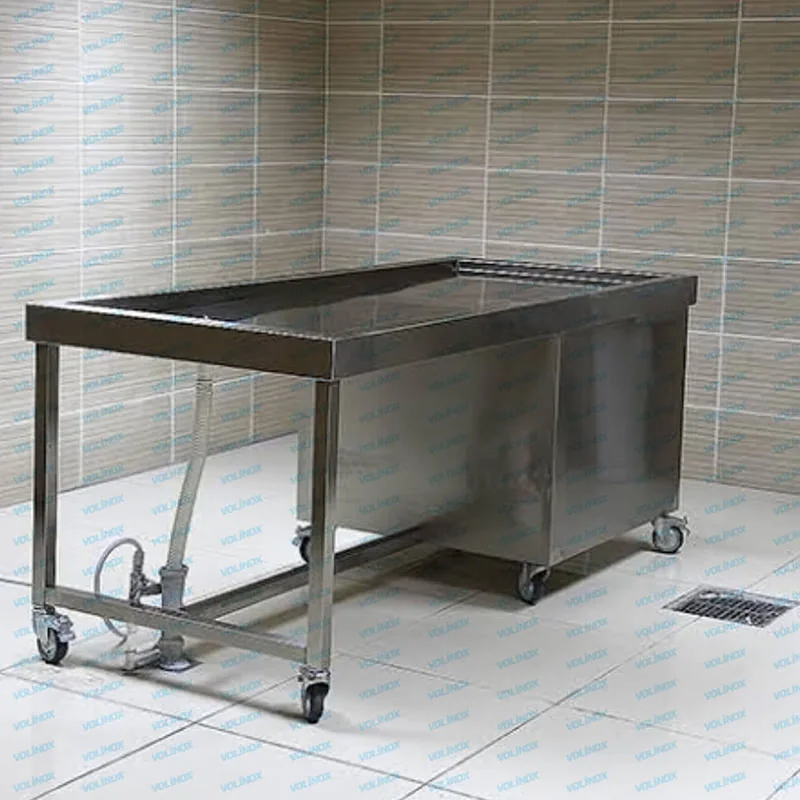
In Muslim communities the deceased is washed (ghusl) before burial, traditionally on a table known in Turkish as a teneşir. These tables were once made of wood or stone; today they have largely been replaced by stainless steel washing tables that are hygienic, easy to clean and built to last. A well-chosen table makes the work of the washers easier, keeps the washing room clean and is part of the care shown to the deceased. This guide looks at the technical features of the table and at washing-room hygiene, not at the religious procedure itself.
Material: why stainless steel?
Stainless steel stands up to water, soap and disinfectants. Because it is non-porous it does not absorb liquids or hold odours, and it cleans easily. Wooden surfaces, by contrast, soak up moisture over time and can become a hygiene problem. Grade AISI 304 stainless steel is widely used for washing-room equipment. Smooth welds and rounded corners prevent dirt from building up. Cleaned with the right products, a stainless surface keeps its original appearance for many years.
Features a ghusl table should have
| Feature | Why it matters |
|---|---|
| Sloped, perforated top | Water runs to a single outlet instead of pooling under the body. |
| Raised edges | Limits splashing onto the floor. |
| Sink and mixer tap | Lets washers set the water temperature and rinse cloths and utensils. |
| Hand shower | Allows water to be directed gently and precisely. |
| Shrouding tray and drying table | Drying and shrouding can follow on in the same place, in an orderly way. |
| Under-table cabinet | Keeps shrouds, towels and cleaning supplies within reach. |
Volinox washing tables include a sink and mixer tap, while a shrouding tray and a drying table can be added as options. Tables are made in standard sizes or to the dimensions a facility requires.
Size and working height
The table should be long enough to take an adult comfortably and wide enough for washers to work from both sides. Choose a working height that does not force staff to bend for long periods. Leave enough clear space around the table for two people to move at the same time. If you need a custom size, sharing the room plan and door dimensions at quotation stage allows the table to be designed around the space.
Mobile or fixed?
Tables on castors make it easier to move the deceased from the morgue unit and to reach the floor when cleaning; choose braked castors. Fixed tables suit established washing rooms with permanent water and drainage connections. When transferring the body from a stretcher to the table, hydraulic and mechanical lifts reduce the physical load on staff.
Points to settle before requesting a quote
- How many washes are carried out on an average day, and how many at peak times?
- Are hot water, cold water and drainage already in place where the table will stand, or will they need new connections?
- Should the table be mobile or fixed?
- Which of the sink, hand shower, shrouding tray and drying table do you need?
- How wide is the door, and how much clear space will remain around the table?
Washing-room layout and hygiene checklist
- A non-slip, water-resistant floor sloping towards a floor drain
- Walls finished in an easy-to-wipe material such as ceramic tiles
- Enough hot water capacity for several washes in a row
- Good ventilation to keep humidity and odour under control
- A short, unobstructed route between the morgue unit and the washing area
- Gloves, aprons and boots available for every washer
- Table, counter and floor cleaned and disinfected after every wash, with the drain trap cleared regularly
In small rooms with no space for a separate table, a washing package morgue unit combines storage and washing in one piece of equipment. Communities without any permanent facility can also consider a funeral washing vehicle with morgue.
Related products and articles
You can see our tables on the ghusl washing table page and further equipment under hospital equipment. For a mobile solution, read our mobile ghusl unit guide, and for storage capacity see mortuary cabinet types and sizes. To request a quote for your washing room, use our contact page or message us on WhatsApp.
Share: WhatsApp
Frequently asked questions
What is a teneşir?
Teneşir is the traditional Turkish name for the table or board on which the deceased is washed before burial. The wooden or stone versions of the past have largely given way to hygienic stainless steel washing tables.
Why should a ghusl table be stainless steel?
Stainless steel resists water and disinfectants, does not absorb liquids and is easy to clean. Wooden surfaces absorb moisture over time and can lead to odour and hygiene problems.
How should a washing table drain?
The top should slope towards a single outlet connected to the washing room's waste water system. Clean the strainer and trap regularly, and collect solid waste separately so it does not block the line.
Is a shrouding tray necessary?
It is not essential, but it allows drying and shrouding to be carried out in the same place in an orderly way. In washing rooms that prepare several bodies a day it noticeably speeds up the workflow.
Need a quote or technical details on this topic?Send us your size and capacity requirements and we will help you choose the right solution.
Related articles
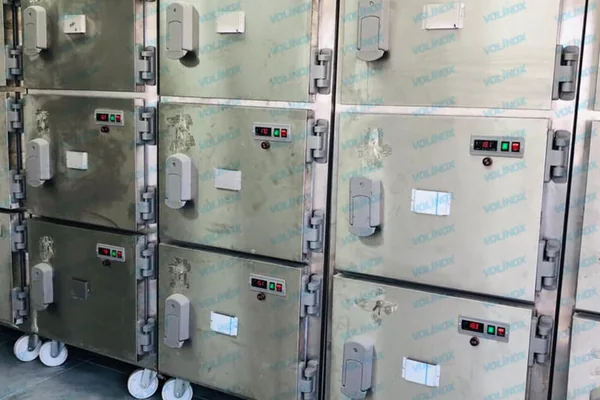
Morgue Refrigerator Temperature: Ranges, Monitoring and Alarms
Typical morgue refrigerator temperatures for short and long-term storage, and how to monitor, log and protect them with alarms and maintenance.
Read more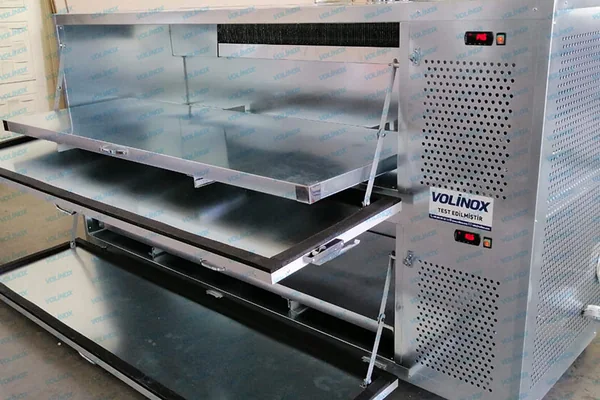
Mortuary Cabinet Types and Sizes: Choosing the Right Capacity
Compare single, two-tier, three-tier and washing-type mortuary cabinets by size and capacity, and see what to measure on site before you place an order.
Read more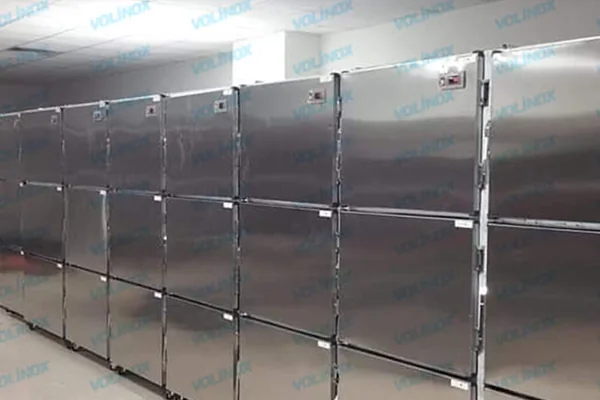
How Long Can a Body Stay in a Morgue? Short vs Long-Term
What determines how long a body stays in a morgue, when freezer storage is needed and how hospitals and municipalities can plan compartment capacity.
Read more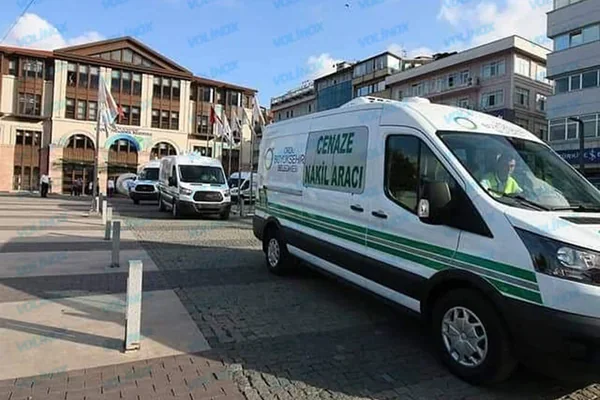
Hearse Van Equipment Guide: Choosing a Funeral Transport Vehicle
A practical guide for municipalities and funeral services to hearse van interiors, refrigerated and standard options and a pre-purchase checklist.
Read more