English
 Türkçe

24/7 Call Center

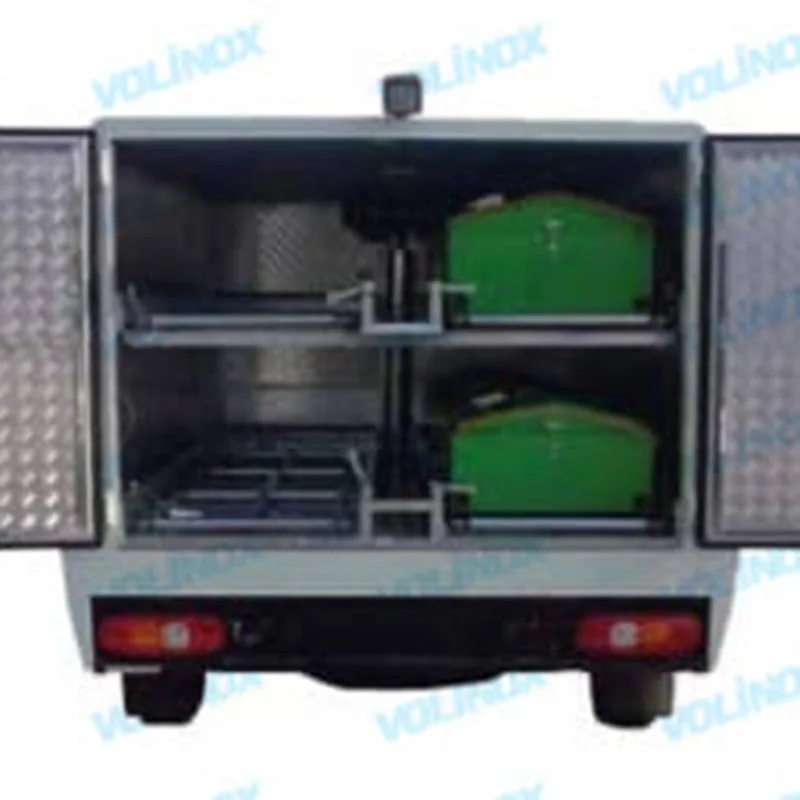
Moving someone who has died to another city or country is an official process that families face at an already difficult time. The two most common questions are which documents are needed and what kind of coffin is required. This article summarises the Council of Europe's Agreement on the Transfer of Corpses and how Türkiye's funeral transport regulation applies it to domestic transfers and the repatriation of remains.
The international framework
The agreement was signed in Strasbourg in 1973; Türkiye is a party and published it in its Official Gazette in 1975. Under it, every body transferred between countries must be accompanied by a laissez-passer for a corpse issued by the competent authority of the state of departure. Apart from documents required by transport conventions, the destination and transit states may not ask for any other document.
The laissez-passer is issued only once the authority has confirmed that the departure state's medical, health, administrative and legal requirements are met, that the coffin complies, and that it contains only the named person's remains and personal effects.
Coffin requirements for international transfer
The coffin must be impervious, with absorbent material inside. The agreement allows two constructions:
- Double coffin: Wooden outer coffin with sides at least 20 mm thick and an inner coffin of carefully soldered zinc, or of another material that is self-destroying.
- Single coffin: Wooden coffin with sides at least 30 mm thick, lined with a sheet of zinc or another self-destroying material.
This is what a zinc-lined or hermetically sealed coffin means: the soldered lining keeps fluids and odours inside during a long journey. Where the departure authority requires it, and for air transport, the coffin needs a purifying device that balances internal and external pressure, or guarantees of resistance the authority accepts. If death was caused by a contagious disease, the body is wrapped in a shroud impregnated with an antiseptic solution. A coffin shipped as ordinary freight must be packaged so that it no longer looks like a coffin and marked to be handled with care.
Türkiye's regulation applies the double-coffin rule to bodies leaving the country and adds details: watertight joints, lid screws no more than 20 cm apart, metal reinforcing bands, and the two coffins fixed so they cannot move.
Documents for transfers within Türkiye
Every transfer starts with the death certificate. For a body leaving its province, a funeral road permit is obtained from the municipality's health services or the village head; it also confirms that the coffin is sealed. The body must travel in an insulated transfer coffin that prevents leakage and odour, and the vehicle must be refrigerated unless a refrigerated coffin is used or the trip is short with no risk of deterioration. Our hearse van equipment guide covers vehicle fit-out in detail.
For transfers abroad, the municipality issues the road permit, the health authority the laissez-passer, and both go to the border health officers at departure. The regulation also bans moving the bodies of people who died of cholera, plague, smallpox, anthrax, leprosy or glanders to another place within one year of death.
Repatriation to Türkiye
For bodies brought into Türkiye, a transfer document must show that the transfer is permitted and poses no health risk, with the person's identity number, name, father's name, place, date and manner of death. Formalities abroad follow local rules; Turkish embassy notes list a petition, passport or ID, the death certificate and the local removal permit. Lists vary, so check with the relevant Turkish mission.
A checklist for funeral services
- enough insulated, leak-proof transfer coffins
- refrigerated vehicles or coffins for long routes
- a supplier for wooden outer and soldered inner coffins
- sample documents and contacts of approving offices
- clean coffins and vehicles after every transfer; Turkish rules call for washing or wiping visibly soiled surfaces with a 10% bleach solution
If the deceased has to be kept until the transfer, our article on how long a body can stay in a morgue explains what affects waiting times.
Volinox coffins and transfer solutions
The aluminum raft coffin weighs about 25 kg, carries up to 250 kg and has sliding handles. Wooden and European-style models are on the ceremonial coffins page; the refrigerated coffin and the refrigerated funeral transport vehicle keep the cold chain on long routes. Share your yearly transfers and routes through our contact page. For binding information on documents, ask the competent local authority.
Sources: Council of Europe, Agreement on the Transfer of Corpses (ETS No. 80, 1973); Turkish Regulation on Cemeteries and Funeral Transport and Burial (Official Gazette 19.01.2010, No. 27467, as amended), Arts. 4, 16, 24, 27–37.
Share: WhatsApp
Frequently asked questions
What is a laissez-passer for a corpse?
It is the document that must accompany a body transferred between countries that are party to the 1973 Agreement on the Transfer of Corpses. It is issued by the competent authority of the departure state and is written in that state's language and in English or French.
Why use a zinc-lined coffin?
The soldered zinc lining makes the coffin impervious, keeping fluids and odours inside during a long journey. The agreement accepts either a wooden outer coffin at least 20 mm thick with a soldered zinc inner coffin, or a single wooden coffin at least 30 mm thick lined with zinc.
Is refrigeration required for funeral transport vehicles in Türkiye?
Vehicles carrying a body to another settlement must have refrigeration, unless a refrigerated coffin is used or the journey is short and there is no risk of deterioration.
What is needed to repatriate a body to Türkiye?
A transfer document showing that the transfer is permitted and poses no health risk must be presented. Documents required in the country of death vary, so check with the relevant Turkish embassy or consulate.
Need a quote or technical details on this topic?Send us your size and capacity requirements and we will help you choose the right solution.
Related articles
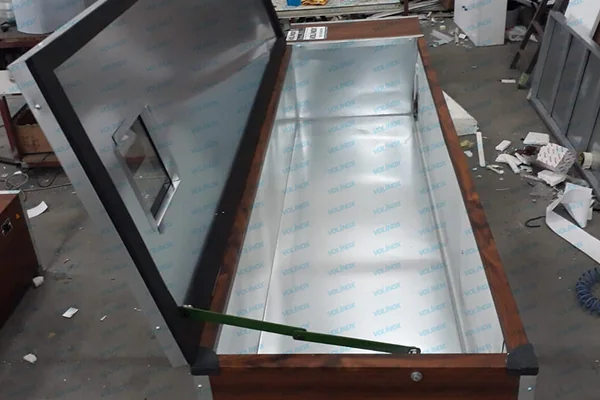
Refrigerated Coffin: How It Works and When to Use One
How a refrigerated coffin works, how it compares with a morgue cabinet, when it is the right choice and how to use and clean it safely.
Read more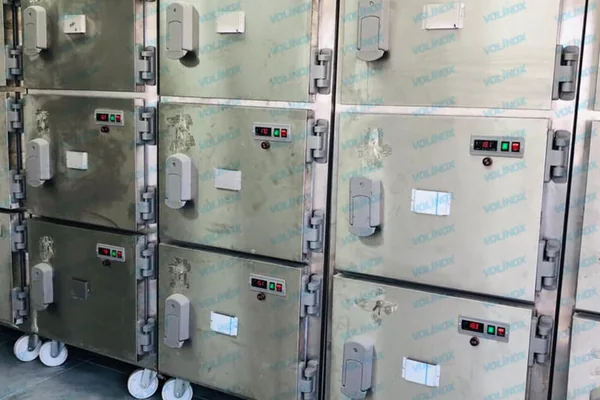
Morgue Refrigerator Temperature: Ranges, Monitoring and Alarms
Typical morgue refrigerator temperatures for short and long-term storage, and how to monitor, log and protect them with alarms and maintenance.
Read more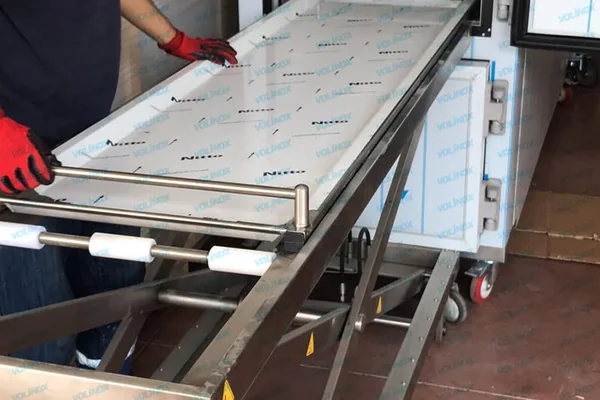
Mortuary Lifting Equipment: Lifts, Trolleys, Safe Transfers
How trays, trolleys and mortuary lifts make transfers safer, with manual handling risks, buying criteria and inspection duties.
Read more
What Is a Field Hospital? Modules, Types and Planning
A clear guide to field hospitals: the WHO Type 1, 2 and 3 classification, modular field hospital units, the morgue area and planning questions.
Read more