English
 Türkçe

24/7 Call Center

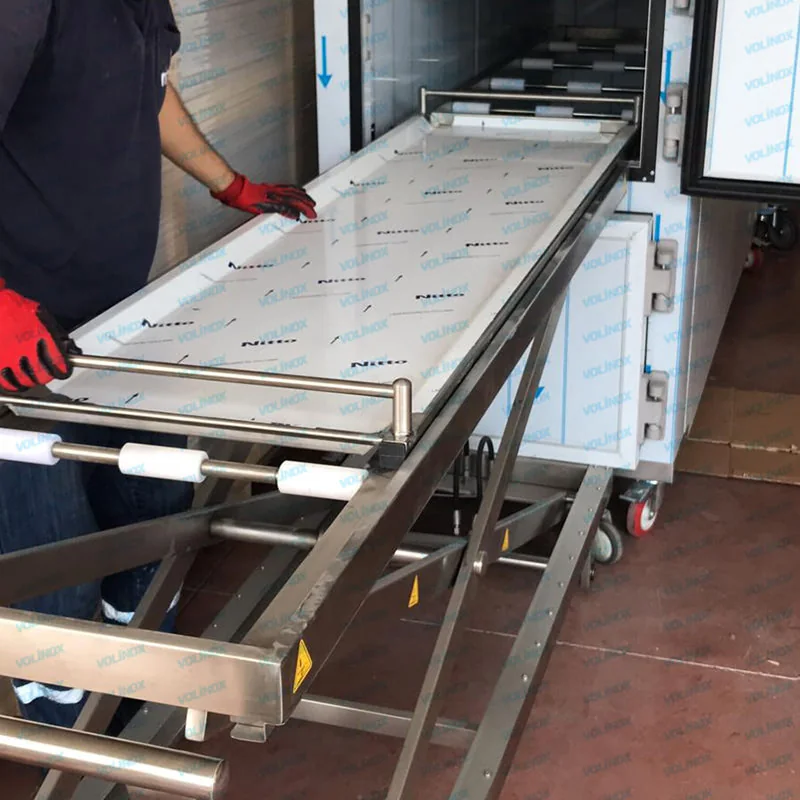
Much of the daily work in a mortuary, washing room or autopsy suite is moving the deceased from one surface to another: into a cabinet, onto an autopsy or washing table, then to a coffin or vehicle. Every transfer matters for the dignity of the deceased and for staff health. This article explains the difference between body trays, trolleys and mortuary lifts, the risks of manual handling, what to check when choosing mortuary lifting equipment, and the inspection duties that apply.
Why manual handling is a risk
European rules on the manual handling of loads (Council Directive 90/269/EEC) target tasks such as lifting, putting down, pushing, pulling or carrying a load that may injure workers, particularly their backs. Türkiye's Manual Handling Regulation, prepared in parallel with this directive, defines manual handling the same way. Many of the risk factors listed in the annex apply directly to mortuary work:
- the load is too heavy or too large, difficult to grasp, or unstable
- the load has to be held away from the body, or the worker has to bend or twist
- there is too little space, the floor is slippery or uneven, or there are changes in level
- rest periods are too short and the pace of work cannot be changed by the worker
Employers are first required to organise work so that loads do not need to be handled manually, in particular by using mechanical equipment. Where manual handling cannot be avoided, they must reduce the risk and inform and train their staff. In a mortuary, body trays and lifts are how this duty is met in practice.
Trays, trolleys and lifts: the difference
- Body tray: Flat surface on which the deceased rests. Typical use: sliding into a cabinet, moving to a table or vehicle.
- Mortuary trolley: Wheeled carrier at a fixed height. Typical use: horizontal transport along corridors and between rooms.
- Hydraulic or mechanical lift: Wheeled carrier with an adjustable platform height. Typical use: transfers between lower and upper compartments, tables and vehicles.
In multi-compartment morgue units, a lift is most useful for the upper levels: once the platform reaches the compartment, the tray slides across and staff no longer lift the load. How front and side loading affect the transfer area is covered in our article on mortuary cabinet types and sizes.
What to check when choosing a mortuary lift
- Capacity: Volinox lifts are made with 500 kg and 1000 kg capacity options. Never exceed the lifting capacity on the manufacturer's label; where a lift is used below that capacity, Turkish rules require the working capacity to be clearly marked.
- Drive type: between hydraulic and mechanical, weigh frequency of use, available maintenance and staff habits.
- Height range: the lowest and highest platform positions must reach your lowest and highest compartments, your autopsy or washing table and, if relevant, the vehicle floor. Measure these heights and share them when you ask for a quote.
- Platform and tray fit: Volinox gives a tray size of 210 × 65 × 4 cm for its morgue units. The lift platform must carry this tray and let it slide freely.
- Material: stainless steel or electrostatic oven-painted frames are available. In wet areas that are disinfected often, choose surfaces that are easy to wipe clean.
- Movement: braked castors, easy turning in tight spaces and smooth travel over thresholds keep the lift steady during a transfer.
Inspection and maintenance
Directive 2009/104/EC on the use of work equipment requires equipment exposed to deterioration to be inspected periodically by competent persons, with details set by national law. In Türkiye, for example, the regulation on work equipment lists “lifting tables” with a maximum inspection interval of one year unless the relevant standard (EN 1570) sets another period, and names the engineers and technicians who may carry out the inspection. Check with your competent inspector which equipment group your lift falls under.
Before each use, check the brakes, platform lock and any hydraulic leaks; after each use, clean and disinfect the platform and frame. Lubricate moving parts and replace worn seals at the manufacturer's intervals. For the position of the table and the transfer route in an autopsy room, see our autopsy table specifications checklist.
Volinox lifts and mortuary equipment
Hydraulic and mechanical models are shown on the hydraulic and mechanical lifts page. For the equipment a lift works with, see morgue units, the autopsy table and the ghusl washing table. Send us your compartment heights, table sizes and daily number of transfers through our contact page, and we will help you choose a suitable lift.
Sources: Council Directive 90/269/EEC; Directive 2009/104/EC; Turkish Manual Handling Regulation (Official Gazette 24.07.2013, No. 28717) and Regulation on the Use of Work Equipment, Annex III, 2.2 and Table 2.
Share: WhatsApp
Frequently asked questions
What is the difference between a mortuary lift and a mortuary trolley?
A trolley moves the deceased horizontally at a fixed height. A mortuary lift has a platform that can be raised and lowered, so the tray can be slid into compartments, onto tables or into a vehicle at different heights without being lifted.
Do mortuary lifts need periodic inspection?
Under Directive 2009/104/EC, work equipment exposed to deterioration must be inspected periodically by competent persons, with intervals set nationally. In Türkiye, lifting tables must be inspected at least once a year unless the relevant standard sets another period.
What capacity do Volinox lifts have?
Volinox makes hydraulic and mechanical lifts with 500 kg and 1000 kg capacity options, in stainless steel or with electrostatic oven paint. Product features and the technical specification are given with the quote.
Does a lift remove all manual handling?
Not always. Some steps, such as placing the deceased on a tray, may still require manual handling. In those cases the rules require methods that reduce the risk and training for staff on correct handling.
Need a quote or technical details on this topic?Send us your size and capacity requirements and we will help you choose the right solution.
Related articles
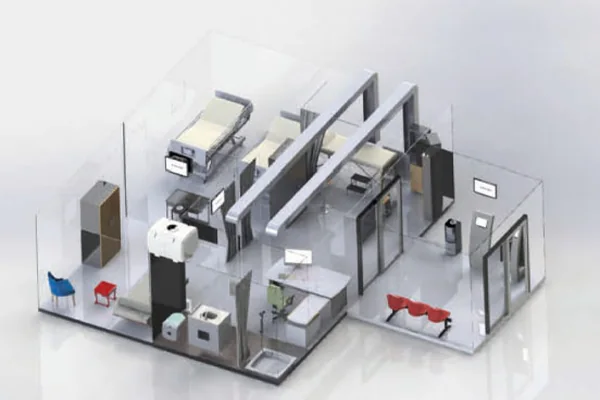
What Is a Field Hospital? Modules, Types and Planning
A clear guide to field hospitals: the WHO Type 1, 2 and 3 classification, modular field hospital units, the morgue area and planning questions.
Read more
Repatriation of Remains: Documents and Coffin Requirements
Documents and coffin rules for moving a body between countries: the laissez-passer, zinc-lined coffins, air transport and Türkiye's regulation.
Read more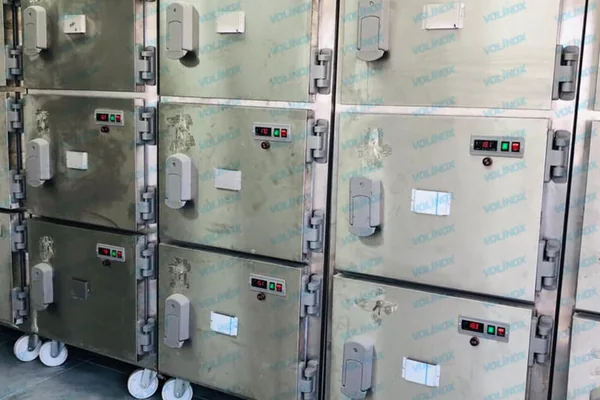
Morgue Refrigerator Temperature: Ranges, Monitoring and Alarms
Typical morgue refrigerator temperatures for short and long-term storage, and how to monitor, log and protect them with alarms and maintenance.
Read more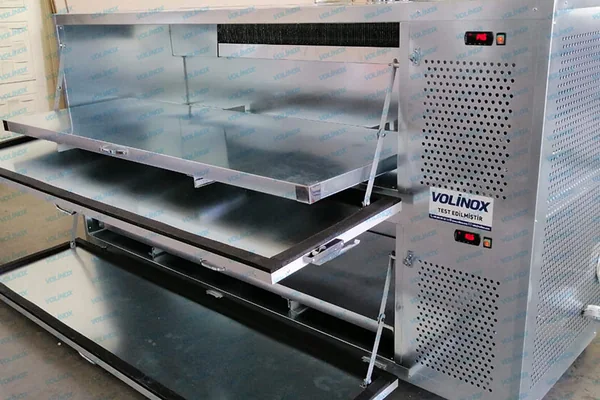
Mortuary Cabinet Types and Sizes: Choosing the Right Capacity
Compare single, two-tier, three-tier and washing-type mortuary cabinets by size and capacity, and see what to measure on site before you place an order.
Read more