English
 Türkçe

24/7 Call Center

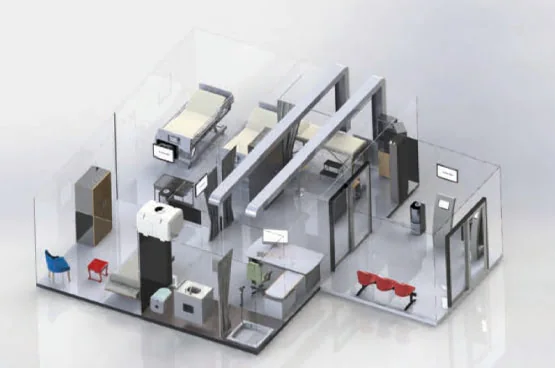
After an earthquake, a flood or a major accident, local hospitals may be damaged or simply overwhelmed by the number of patients. Temporary health facilities that can be set up quickly then become essential. What is a field hospital, and which modules does it contain? This article explains the concept, the World Health Organization (WHO) classification of emergency medical teams and the questions to ask before choosing a modular field hospital.
What does “field hospital” mean?
A field hospital is a portable, temporary health facility set up on open ground, independent of any hospital building. It can be built from tents, prefabricated buildings, vehicles or container modules. In Turkish it is called a sahra hastanesi (“sahra” also means open country), hence the name of the Volinox Sahra Health Hospitals line. Its purpose is to keep examination, emergency care and, where needed, surgery and inpatient care running where normal services are disrupted.
WHO emergency medical team types
WHO classifies emergency medical teams (EMTs) by the services they can deliver. The key minimum benchmarks in its 2021 classification and minimum standards document are:
- Type 1 mobile: Outpatient initial care and referral in several locations. Minimum benchmark: at least 50 outpatients a day.
- Type 1 fixed: Outpatient care and referral from a fixed site. Minimum benchmark: at least 100 outpatients a day.
- Type 2: Inpatient acute care, general and obstetric surgery. Minimum benchmark: at least 1 operating table, at least 20 inpatient beds per table, 7 major or 15 minor operations a day.
- Type 3: Type 2 services plus complex referral-level and intensive care. Minimum benchmark: at least 2 operating tables and 40 beds, at least 4 intensive care beds, 15 major or 30 minor operations a day.
All teams are expected to be operational in the field within 72 hours of a disaster. After arrival, the time to start services is 24 hours for Type 1, 24–36 hours for Type 2 and 36–48 hours for Type 3.
Which modules does a modular field hospital include?
The modules depend on the level of care. Volinox field hospitals can be planned with examination and doctor's rooms, a waiting room, observation and emergency rooms, an operating room, an intensive care unit, a morgue and washing room, WC and showers, washbasins and a kitchen. Grouped by function:
- Reception and outpatient care: waiting, examination and doctor's rooms, where triage (prioritising patients by urgency) takes place.
- Emergency care and observation: the emergency room and an observation room for patients awaiting referral.
- Surgery and intensive care: services that correspond to WHO Type 2 and Type 3.
- Support areas: WC and showers, washbasins, kitchen and storage.
- Morgue and washing room: where the deceased are kept with dignity and prepared for burial.
Why the morgue belongs in the plan
The WHO document asks emergency medical teams to manage dead bodies in a way that is dignified, culturally appropriate, safe and in line with public health practice. As a minimum, Type 1 fixed facilities should be able to keep two bodies in a dedicated tent, and Type 2 and Type 3 facilities at least four bodies in a dedicated tent in a temperature-controlled environment. It also recommends that families can visit, that religious and cultural needs are respected and, where possible, that a separate area is provided for identification and mourning.
In Türkiye, the deceased are washed and shrouded in a washing room (gasilhane) at the family's request, so placing the morgue and washing room side by side avoids unnecessary movement. For cabinet settings, see our article on morgue refrigerator temperature; for washing equipment, read the ghusl washing table guide.
Questions to ask before you choose
- Level of care: outpatient care only, or surgery and inpatient beds too? The WHO types offer a shared vocabulary.
- Set-up: how will modules be transported, the ground prepared and power and water connected?
- Hygiene: surfaces must be easy to clean. Volinox specifies inner and outer walls, ceiling and floor in at least AISI 304 stainless steel, 0.80 mm thick.
- Insulation and climate: Volinox specifies polyurethane insulation with a density of at least 40, 100 mm outer and 80 mm inner walls, and hygienic air-conditioning and ventilation.
- Water and waste: plan clean water, wastewater and medical waste separately from the start.
Volinox Sahra Health Hospitals
Module options are listed on the Sahra Health Hospitals page; see also hospital equipment and, for the morgue area, the washing package type morgue unit. Share the region, modules and capacity through our contact page for a technical specification and quote.
Sources: World Health Organization, Classification and minimum standards for emergency medical teams (2021); Turkish Regulation on Cemeteries and Funeral Transport and Burial, Art. 26.
Share: WhatsApp
Frequently asked questions
Is a container hospital the same as a field hospital?
Field hospital is the general term for temporary, portable health facilities; they can be built from tents, prefabricated buildings, vehicles or container-type modules. A facility made of container modules is one form of field hospital.
How quickly can a field hospital start working?
WHO expects emergency medical teams to be operational in the field within 72 hours of a disaster. Once a team has arrived, the time to start services is given as 24 to 48 hours depending on the team type. In practice it also depends on transport, ground preparation and utility connections.
Does a field hospital need a morgue?
WHO minimum standards ask Type 1 fixed facilities to be able to keep at least two bodies in a dedicated tent, and Type 2 and Type 3 facilities at least four bodies in a temperature-controlled environment. Type 1 mobile teams are exempt from this requirement.
Which modules can a Volinox field hospital include?
Examination and doctor's rooms, a waiting room, observation and emergency rooms, an operating room, an intensive care unit, a morgue and washing room, WC and showers, washbasins and a kitchen can be added or removed according to the project.
Need a quote or technical details on this topic?Send us your size and capacity requirements and we will help you choose the right solution.
Related articles
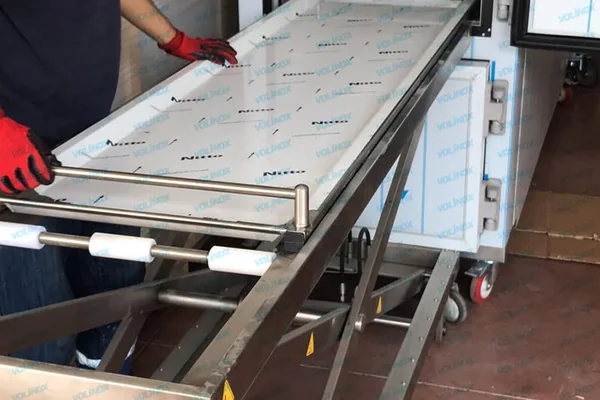
Mortuary Lifting Equipment: Lifts, Trolleys, Safe Transfers
How trays, trolleys and mortuary lifts make transfers safer, with manual handling risks, buying criteria and inspection duties.
Read more
Repatriation of Remains: Documents and Coffin Requirements
Documents and coffin rules for moving a body between countries: the laissez-passer, zinc-lined coffins, air transport and Türkiye's regulation.
Read more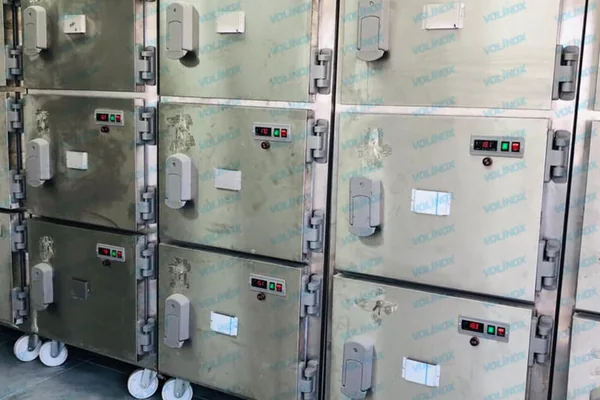
Morgue Refrigerator Temperature: Ranges, Monitoring and Alarms
Typical morgue refrigerator temperatures for short and long-term storage, and how to monitor, log and protect them with alarms and maintenance.
Read more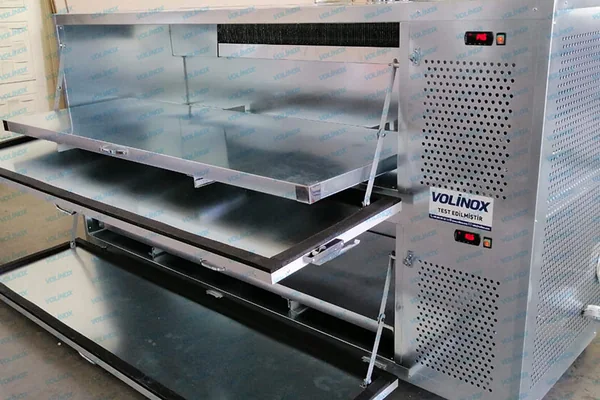
Mortuary Cabinet Types and Sizes: Choosing the Right Capacity
Compare single, two-tier, three-tier and washing-type mortuary cabinets by size and capacity, and see what to measure on site before you place an order.
Read more