English
 Türkçe

24/7 Call Center

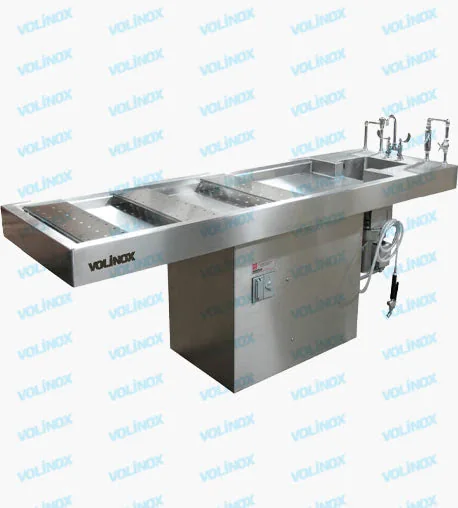
The autopsy table is the central workstation of every forensic unit, hospital mortuary and medical school dissection room. An examination can last for hours, and throughout that time the table has to offer a safe, hygienic surface while managing fluids, water and waste in a controlled way. This article sets out the specifications worth looking for and the questions to ask before you buy a post-mortem table.
Body and top
Autopsy tables are made of stainless steel because it withstands water, chemicals and frequent disinfection; grade AISI 304 is widely used in the sector. Look for smooth welds, rounded corners and surfaces without gaps where dirt can collect. The top should slope towards a single drain outlet and be surrounded by raised edges. Space beside the top for instruments helps keep the work orderly during long examinations.
Core equipment on the Volinox autopsy table
| Feature | Purpose |
|---|---|
| Perforated drainage top | Carries fluids away from beneath the body towards the drain; removable plates make cleaning easier. |
| Sink and mixer tap | For rinsing organs and instruments, with hot and cold water and controlled washing from a hand spray. |
| Waste cabinet | Keeps waste collected close to the table in a closed, orderly way. |
| Air gun | Provides a ready compressed-air connection for drying and for tasks that need air pressure. |
Volinox states that its autopsy tables are available in standard or custom sizes and that its products carry CE certification.
Pedestal or cabinet base?
Pedestal tables on a central column leave legroom all around the table, which helps when several specialists work at the same time. Cabinet-base models add storage for waste and supplies. Let the size of the room and your workflow decide.
Ergonomics and safety
- Working height: choose a height that limits back and neck strain during long examinations, and consider whether staff of different heights need height adjustment.
- Head rest and accessories: confirm in advance that head rests, organ scales or dissection boards fit the table.
- Electrical safety: water and electricity meet at the table, so every connection must be protected against water ingress.
- Ventilation: plan the room's general ventilation together with local extraction around the table to control odours and chemical vapours.
- Transfers: hydraulic and mechanical lifts help move the body safely from stretcher to table.
Positioning the table in the room
Where the table stands shapes the workflow of the whole room. The route from the morgue unit to the table should be short and clear, and the table needs strong, shadow-free examination lighting above it. A gentle floor slope from the table area towards a floor drain makes cleaning easier. A hand-wash basin separate from the table sink is good hygiene practice. Before installation, water, drainage, power and compressed-air points should be positioned to suit the dimensions of the table.
Purchasing checklist
- How many examinations are carried out per year, and how many tables are needed at once?
- Where are the water, hot water, drainage and compressed-air connections in the room?
- Is there enough space around the table for staff to move freely?
- Should the sink be integrated into the table or fitted to a separate counter?
- Which accessories are required, and is the table compatible with them?
- How will installation, training, servicing and spare parts be handled?
Cleaning and care
After each examination, rinse away organic residue with water first, then apply a detergent and disinfectant suitable for stainless steel. Do not leave chlorine-based products on the surface for long, and rinse them off thoroughly; abrasive pads can damage the protective surface layer of the steel. Check the strainer, trap and drain line regularly.
Related products and articles
You can view the table on our autopsy table page and further equipment under hospital equipment. For storage before and after examination, see our morgue units; institutions that teach anatomy may also need a cadaver storage tank. Our cadaver storage tank guide and morgue refrigerator temperature guide cover related topics. For a quote, contact us through our contact page or on WhatsApp.
Share: WhatsApp
Frequently asked questions
How are autopsy table dimensions chosen?
The top must comfortably hold an adult body and the instruments in use; overall length depends on whether the sink section is built into the table. Room size and the clear working space needed around the table should also be taken into account.
How does an autopsy table differ from a washing table?
A washing table is designed for washing the deceased before burial. An autopsy table adds controlled drainage of fluids, organ and instrument rinsing, waste handling and ergonomics suited to long working sessions.
How should a stainless steel autopsy table be cleaned?
Rinse off organic residue with water, then apply a detergent and disinfectant suitable for stainless steel. Rinse chlorine-based products off thoroughly and avoid abrasive pads.
Need a quote or technical details on this topic?Send us your size and capacity requirements and we will help you choose the right solution.
Related articles
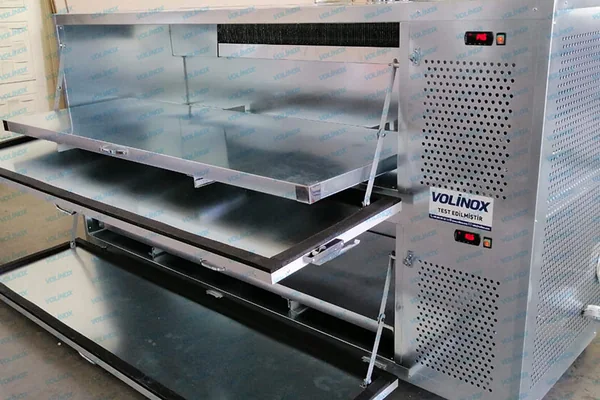
Mortuary Cabinet Types and Sizes: Choosing the Right Capacity
Compare single, two-tier, three-tier and washing-type mortuary cabinets by size and capacity, and see what to measure on site before you place an order.
Read more
Condolence Vehicle, Trailer or Mourning Tent: Which to Choose?
Condolence vehicles, trailers and mourning tents compared on set-up, comfort and facilities, with practical selection criteria for municipalities.
Read more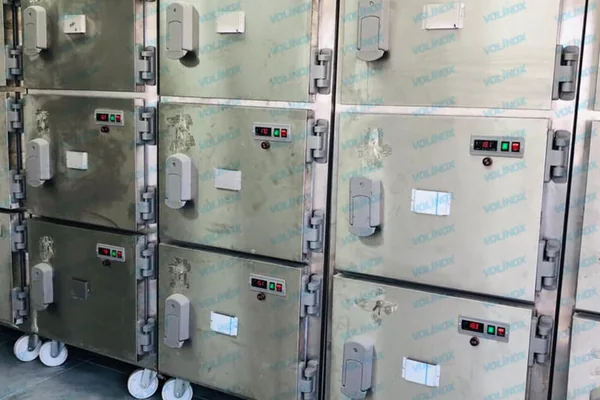
Morgue Refrigerator Temperature: Ranges, Monitoring and Alarms
Typical morgue refrigerator temperatures for short and long-term storage, and how to monitor, log and protect them with alarms and maintenance.
Read more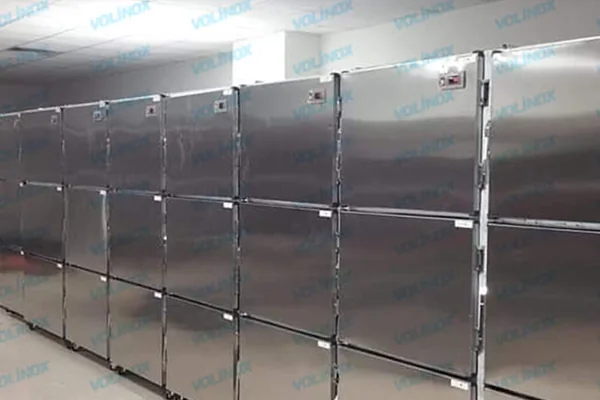
How Long Can a Body Stay in a Morgue? Short vs Long-Term
What determines how long a body stays in a morgue, when freezer storage is needed and how hospitals and municipalities can plan compartment capacity.
Read more