English
 Türkçe

24/7 Call Center

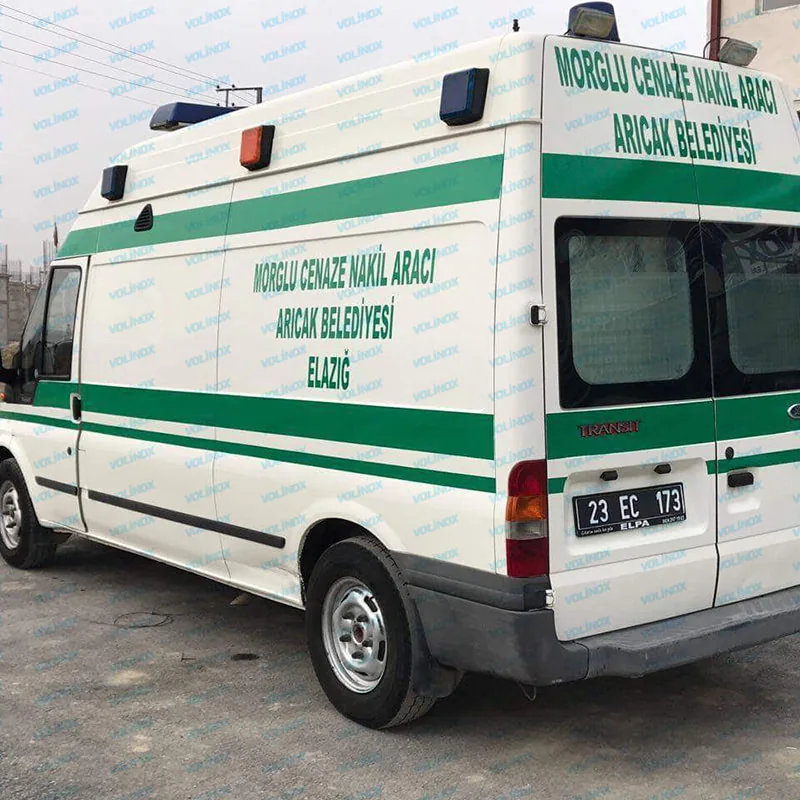
One of the first practical questions a family asks after a loss is this: is the hearse free of charge, and who provides it? A good part of the answer is in Türkiye's burial regulation, the one that governs cemeteries, the transfer of bodies and burial procedures (RG 19.01.2010, 27467). This article summarises those provisions in plain language. Let us say at the outset that the Regulation contains no fee amount or tariff; for the current charge you need to ask the municipality concerned.
Who provides the funeral transport vehicle?
Under Art. 29 of the Regulation, supervising the proper transport of bodies within municipal borders and providing the necessary funeral vehicle, coffin and similar equipment is the duty of municipalities. Municipalities carry out this duty themselves or through private companies they authorise. Transport of a body within municipal limits is likewise carried out, or commissioned, by the municipality (Art. 31).
Villages are different: the vehicle used to carry a body from a village to another settlement is provided by the civil authority to which the village belongs (Art. 29/2).
Is the hearse paid or free?
The only provision in which the Regulation states anything explicit about charges is Art. 25: poor or unclaimed bodies are collected, washed, shrouded and buried by the municipality or the village headman without any fee. The transport of poor people's bodies to another city is arranged by the civil authority within local means (Art. 33).
For other bodies the Regulation states no amount or tariff. So the answer to «is it free?» can differ with each family's situation and the municipality's practice; the most reliable step is to ask the municipality's funeral services unit. If the service is to be bought from a private company authorised by the municipality, learning its scope and price in advance spares the family a surprise later.
Which vehicle may carry a body?
The Regulation prohibits using general-purpose vehicles to carry bodies and using vehicles meant for carrying bodies for other purposes (Art. 29/1). Vehicles carrying a body to another settlement must be equipped with a cooling device; no cooling is required where a special coffin with its own cooling is used, or where the journey is short and there is no risk of the body deteriorating. With a suitable arrangement a vehicle may carry more than one body (Art. 30). For equipment details see our article on hearse van equipment.
What to ask when arranging the service
When you contact the municipality's funeral services unit, or the company it has authorised, it helps to clarify a few things: the hours during which the vehicle is available, where the body will be collected from (hospital, home or washing facility), whether the destination is inside or outside the municipal limits, and, if a fee is charged, what it covers. If the death occurred in a public hospital, the hospital issues the burial permit, and whether the body is washed in the hospital's own washing room or the municipality's depends on where the death occurred (Arts. 16 and 26).
Transport to another city
If a body is to be taken outside the province, a body-transport route permit is obtained from the municipality's health affairs unit or from the village headman (Art. 32). Our article on repatriation of remains covers the documents, the coffin requirements and what is asked for transfers abroad.
Vehicle procurement for municipalities
Because providing the vehicle is the municipality's duty, institutions buying one weigh points such as single or multi-body layout according to population and route, cooling and a hygienic interior lining. If the body also has to be washed and prepared, a mobile body-washing unit can be considered separately.
Volinox funeral transport vehicles
Volinox manufactures refrigerated funeral transport vehicles for municipalities and institutions. For models, equipment options and a price offer, write via our contact page or message us on WhatsApp.
Reminder: the Regulation was published in 2010 and some articles may have changed since; check the latest text on mevzuat.gov.tr. Charges and practice can vary between municipalities.
Share: WhatsApp
Frequently asked questions
Is the hearse free of charge?
The Regulation says only that poor and unclaimed bodies are handled without any fee (Art. 25). For other bodies it states no amount or tariff; ask the funeral services unit of the municipality concerned for the current charge.
Who provides the funeral transport vehicle?
Within municipal borders, providing the funeral vehicle, coffin and similar equipment is the duty of municipalities, which do so themselves or through private companies they authorise (Art. 29). In villages the vehicle for transport to another settlement is provided by the civil authority.
Can any vehicle be used to carry a body?
No. The Regulation prohibits using general-purpose vehicles to carry bodies and using body-transport vehicles for other purposes. Vehicles going to another settlement need a cooling device, with exceptions for short journeys and special cooled coffins (Arts. 29, 30).
What is needed to take a body to another city?
A body-transport route permit is obtained from the municipality's health affairs unit or from the village headman; the permit also records that the coffin has been prepared by proper methods (Art. 32).
Need a quote or technical details on this topic?Send us your size and capacity requirements and we will help you choose the right solution.
Related articles
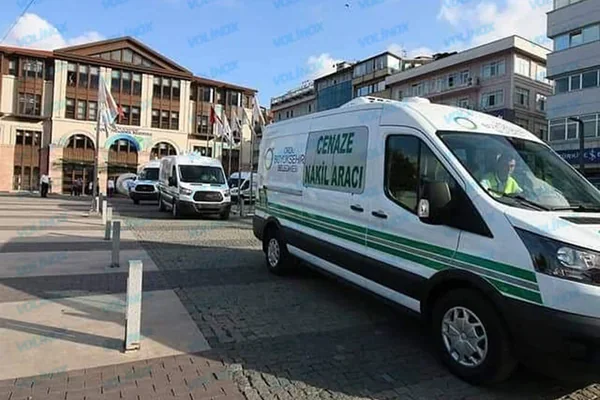
Hearse Van Equipment Guide: Choosing a Funeral Transport Vehicle
A practical guide for municipalities and funeral services to hearse van interiors, refrigerated and standard options and a pre-purchase checklist.
Read more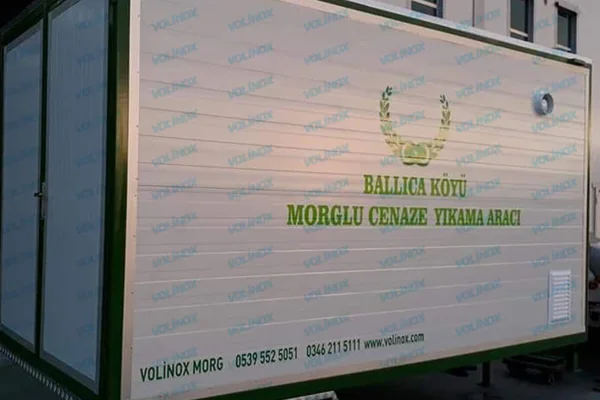
Mobile Ghusl Unit with Morgue: Funeral Washing Trailer Guide
How a trailer-mounted funeral washing unit with a built-in morgue works, what equipment it carries and how to set it up and maintain it.
Read more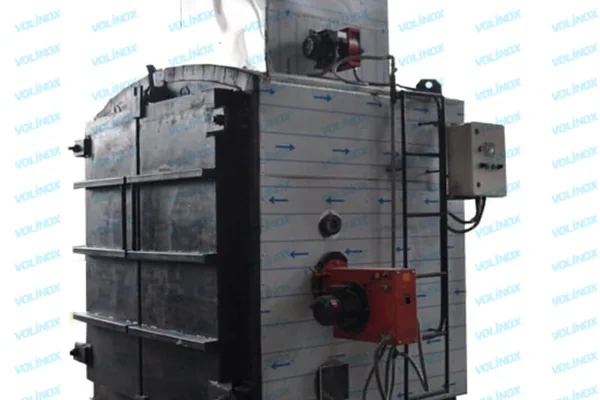
What Is a Crematorium? How Cremation Works and What the Law Says
A crematorium is a facility where a body is burned at high temperature. The process, temperature and duration, and Turkish law on furnaces and ashes.
Read more
What Is an Autopsy? How a Forensic Autopsy Is Carried Out
An autopsy is a medical examination of a body to find the cause of death. Who performs a forensic autopsy and what it covers, under the CMK.
Read more