English
 Türkçe

24/7 Call Center

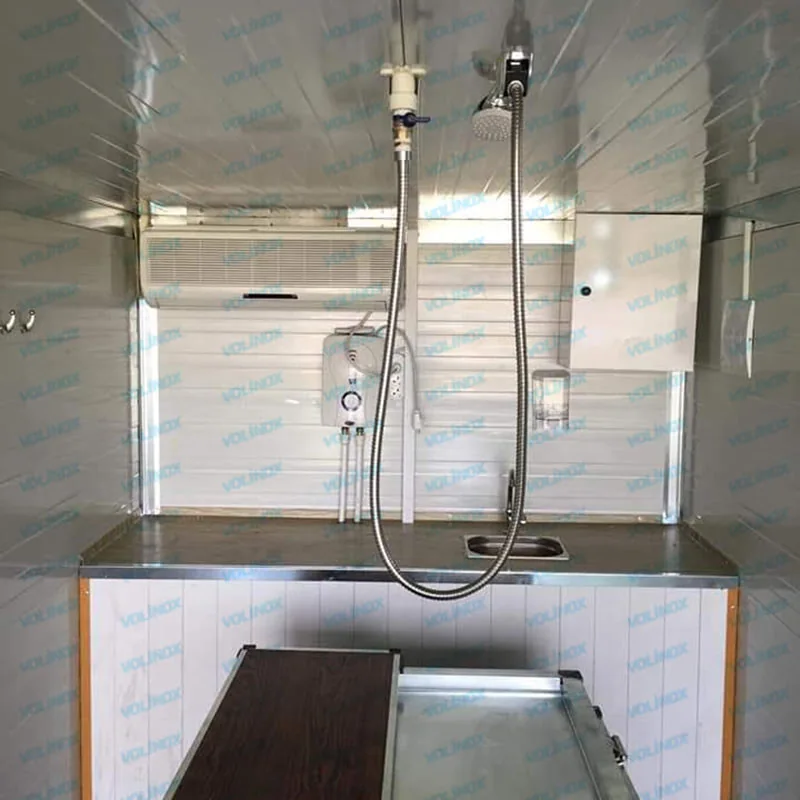
People who search for «what is a gasilhane» are usually a family who has just lost someone or a municipality planning a new facility. In short, a gasilhane is the place where a body is washed, shrouded and placed in a coffin; the washing is done by a gassal, the person appointed to perform it. This article summarises the relevant articles of Türkiye's Regulation on Cemetery Construction, Transfer of Bodies and Burial Procedures (Official Gazette 19.01.2010, no. 27467).
Who runs it, and where?
The Regulation assigns the washing place according to where the death occurred (Art. 26):
- Death in a public hospital: once the burial permit has been issued, and if the relatives ask, the body is washed, shrouded and coffined in the hospital's gasilhane.
- Death outside a hospital: if the relatives ask, the body is brought to the municipality's gasilhane, where appointed gassals wash, shroud and coffin it.
- In villages: the village council prepares a suitable place and provides a gassal to carry out the procedures.
For female bodies, if there is no female gassal on duty, the municipality or village headman has to provide one (Art. 26). The Regulation defines a gassal as the person responsible for washing the body (Art. 4).
How should a body-washing room be built?
Article 13, headed "places for washing, shrouding and coffining", obliges municipalities and village headmen to maintain a sufficient number of body-preparation places or vehicles for the population density. The minimum requirements for a preparation place are:
- washing and preparation areas are covered, from the floor up to a height of at least 2 metres, with a material that is easy to wash and does not harbour dirt;
- a device is provided to heat the water used for washing;
- waste water is discharged hygienically into the sewer or a septic pit.
Municipalities and village councils inspect these places, have health hazards corrected and prevent the use of places that cannot be corrected. The internal plan of a cemetery must also show the disinfection arrangements of the waiting, washing and shrouding places (Art. 12).
Body-preparation vehicles as a mobile option
Alongside fixed places, the Regulation recognises a vehicle option. For body-preparation vehicles, Article 13 asks at minimum for an interior covered with an easy-to-clean material, an adequate water tank, a water-heating device, a waste-water tank that collects the water produced by washing, and a cooling device for bodies that have to wait. This option is useful where a fixed facility cannot be built; see what a mobile washing unit is for details.
Equipment and hygiene
Tables, basins and counters in a washing room are in constant contact with water and cleaning agents, so they are made of easy-to-clean, non-corroding surfaces. We covered table size and material choice in our guide to washing tables; you can find our products on the washing table and morgue funeral washing vehicle pages. If a body has to wait after washing, see how long a body can stay in a morgue.
For project planning, you can reach us through the contact page. This article is general information; for exact requirements, consult the current text of the Regulation and your municipality's funeral services unit.
Source: Mezarlık Yerlerinin İnşaası ile Cenaze Nakil ve Defin İşlemleri Hakkında Yönetmelik (Official Gazette 19.01.2010, 27467; Arts. 4, 12, 13, 26; the text is as published in 2010, follow later amendments on mevzuat.gov.tr).
Share: WhatsApp
Frequently asked questions
What is a gasilhane?
It is the place where a body is washed by a gassal, shrouded and placed in a coffin. The Regulation provides for the hospital's gasilhane for deaths in hospital, the municipality's for deaths elsewhere, and a place prepared by the village council in villages.
How should a body-washing room be built?
Under the Regulation, washing and preparation areas are covered from the floor to at least 2 metres with a material that is easy to wash and does not harbour dirt, a device heats the washing water, and waste water is discharged hygienically into the sewer or a septic pit.
What if a village has no gasilhane?
The village council prepares a suitable place for washing, shrouding and coffining and provides the gassal. Municipalities and villages may also keep a body-preparation vehicle instead of a fixed place.
What must a body-preparation vehicle contain?
An interior covered with an easy-to-clean material, an adequate water tank, a water-heating device, a waste-water tank and a cooling device for bodies that have to wait.
Need a quote or technical details on this topic?Send us your size and capacity requirements and we will help you choose the right solution.
Related articles
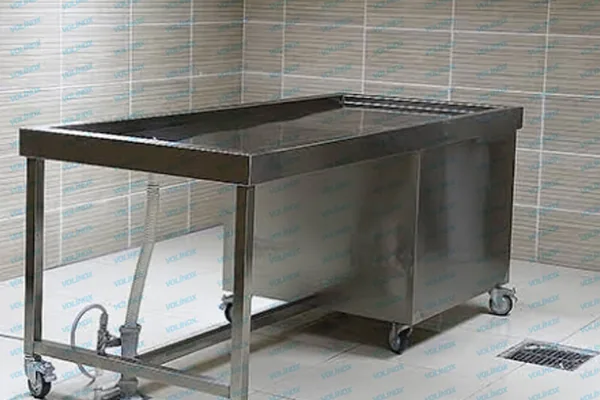
Ghusl Washing Table Guide: Size, Materials and Hygiene
How to choose a body washing table for a ghusl room, from materials and drainage to accessories, plus the basics of washing-room layout and hygiene.
Read more
Repatriation of Remains: Documents and Coffin Requirements
Documents and coffin rules for moving a body between countries: the laissez-passer, zinc-lined coffins, air transport and Türkiye's regulation.
Read more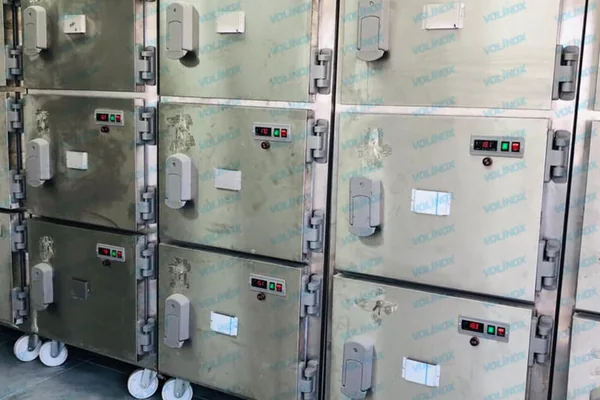
Morgue Refrigerator Temperature: Ranges, Monitoring and Alarms
Typical morgue refrigerator temperatures for short and long-term storage, and how to monitor, log and protect them with alarms and maintenance.
Read more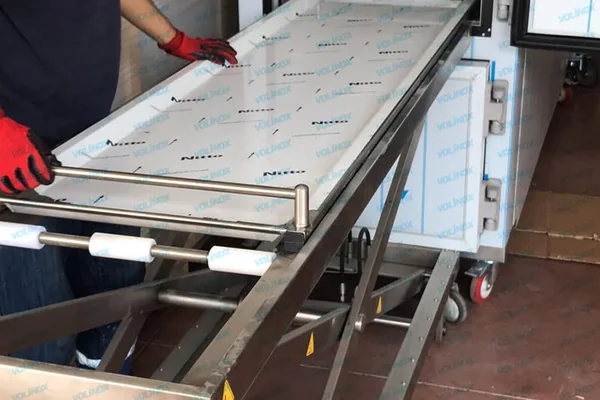
Mortuary Lifting Equipment: Lifts, Trolleys, Safe Transfers
How trays, trolleys and mortuary lifts make transfers safer, with manual handling risks, buying criteria and inspection duties.
Read more