English
 Türkçe

24/7 Call Center

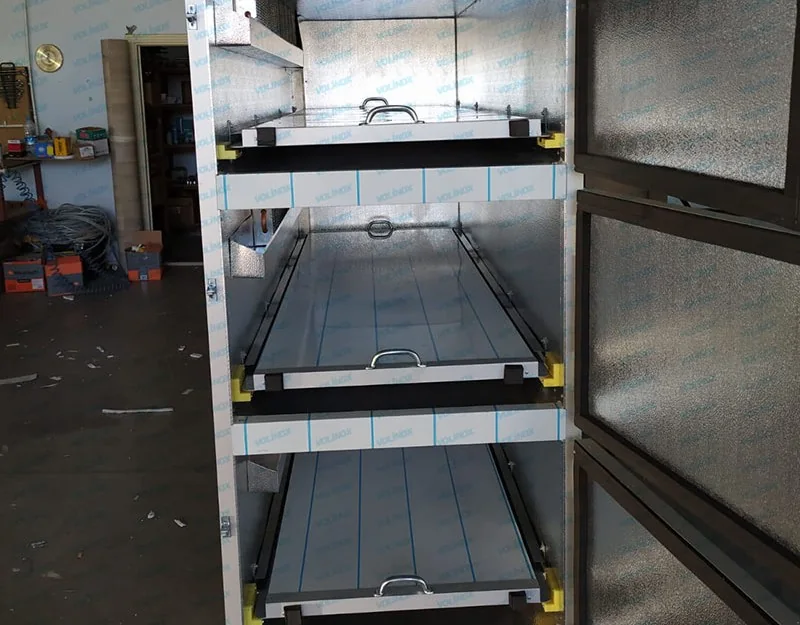
Mortuary refrigerator cleaning is essential both for infection control and for the long life of its stainless steel body. HSG283, the guidance on managing infection risks when handling the deceased published by the UK Health and Safety Executive (HSE), classes refrigerators in the body storage area as a “dirty area”. This article brings together the cleaning and disinfection principles in that guidance and the care recommendations of the stainless steel industry.
Clean first, then disinfect
According to HSG283, regular cleaning with detergent and warm water is usually adequate for facility surfaces. Cleaning removes organic matter and some of the microorganisms associated with soiling. Organic matter must be removed before disinfection, because it can neutralise the action of the disinfectant. In short, wiping disinfectant onto a soiled surface does not do the job.
Step-by-step cleaning
- Empty the compartment and prepare: wear the protective equipment set out in your facility's risk assessment, and follow the manufacturer's instructions for the refrigeration unit and electrical parts.
- Remove trays and racking: HBN 16-01, the mortuary design guidance used in England, asks for internal rollers and racking to be removable so that staff can enter the compartment for cleaning.
- Wash with detergent and warm water: use a soft cloth or sponge and, on polished finishes, wipe along the polish lines.
- Rinse: remove detergent residue with clean water.
- Disinfect: apply the disinfectant chosen by your facility at the dilution stated by its manufacturer and leave it for the full contact time.
- Rinse again and dry: HSG283 says equipment must be rinsed and dried after decontamination and stored clean and dry.
- Check the door gasket and drain: clean the folds of the gasket and make sure the drain line is clear.
When blood or body fluids are spilled
Alongside routine cleaning, there must be arrangements for spillages. HSG283 says spills should be dealt with promptly, and that the volume and spread of the material should decide whether direct disinfection or detergent cleaning followed by disinfection is appropriate. It also warns that many disinfectants become less effective when combined with some detergents and other chemicals.
What to avoid on stainless steel
The stainless steel care and cleaning handbook of the Specialty Steel Industry of North America (SSINA) stresses the following:
- Avoid chloride-containing detergents. Residues can stain the surface and lead to corrosion.
- Prefer a neutral, low-chloride cleaner, especially if you cannot be sure the surface will be rinsed thoroughly. A label saying “for stainless steel” does not guarantee that a product is non-abrasive or non-acidic.
- Do not use ordinary carbon steel brushes or steel wool. Particles left in the surface can cause rust spots.
- After cleaning, rinse with clean water and wipe dry with a soft cloth.
If your facility's procedure calls for a chlorine-based disinfectant, rinsing the surface well and drying it after the contact time becomes all the more important for stainless steel. HSG283 also notes that gases released by repeated use of chlorinated disinfectants can cause breathing problems for some staff, and that harmful by-products may form when formaldehyde comes into contact with hypochlorite. Chemicals should therefore never be mixed.
How often is mortuary refrigerator cleaning needed?
Cleaning frequency and products should be defined in a written procedure from the facility's infection control team. According to HSG283, the procedure should state which disinfectant is used where and for what purpose, its in-use dilution and contact time, and staff should be trained in cleaning and in the use of disinfectants. In hospitals, the procedure should be compatible with the hospital's own infection control policy.
Cleaning and temperature monitoring go together
A clean door gasket seals better, and closing doors promptly after cleaning helps hold the internal temperature. Temperature monitoring and alarms are covered in morgue refrigerator temperature, and hygiene in the washing area in what is a gasilhane and ghusl washing table guide.
Volinox morgue units
Volinox morgue units have a stainless steel body. For questions about the care of your unit or about a new unit, contact us through our contact page or on WhatsApp.
Note: the cleaning and disinfection principles are taken from HSE HSG283 (UK) and HBN 16-01, and the stainless steel advice from the SSINA handbook. In practice, follow your facility's infection control procedure and the instructions of the disinfectant and equipment manufacturers.
Share: WhatsApp
Frequently asked questions
How do you clean a mortuary refrigerator?
Empty the compartment, remove trays and racking, wash surfaces with detergent and warm water and rinse. Then apply the facility's disinfectant at the manufacturer's dilution and contact time, rinse again and dry.
Can you disinfect without cleaning first?
It is not recommended. According to HSE HSG283, organic matter can neutralise the disinfectant, so surfaces should be cleaned with detergent first.
Can bleach be used on a stainless steel morgue fridge?
Stainless steel care guides advise avoiding chloride-containing cleaners. If the facility's procedure requires a chlorine-based disinfectant, rinse thoroughly and dry after the contact time, and never mix chemicals.
How often should a mortuary refrigerator be cleaned?
The facility's infection control team sets the frequency in a written procedure, which should state the product, dilution and contact time; staff should be trained accordingly.
Need a quote or technical details on this topic?Send us your size and capacity requirements and we will help you choose the right solution.
Related articles
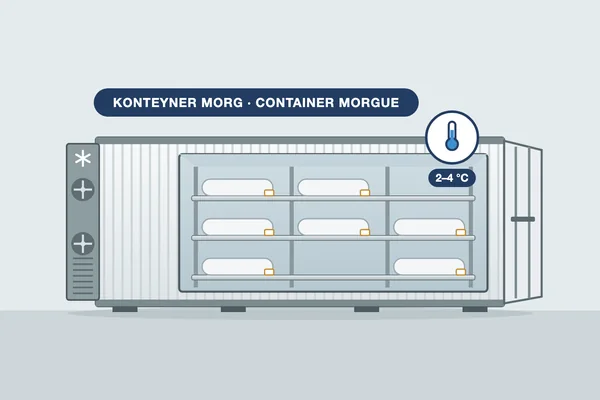
What Is a Container Morgue? Temporary Storage in Disasters
A container morgue is a temporary body store inside a refrigerated container. Temperature, capacity, labelling and alternatives from the disaster manual.
Read more
How Many Body Spaces Does a Hospital Mortuary Need?
A hospital mortuary's capacity comes from its records, not from bed numbers. The factors, a simple estimate, freezer share and space sizes.
Read more
What Is an Autopsy? How a Forensic Autopsy Is Carried Out
An autopsy is a medical examination of a body to find the cause of death. Who performs a forensic autopsy and what it covers, under the CMK.
Read more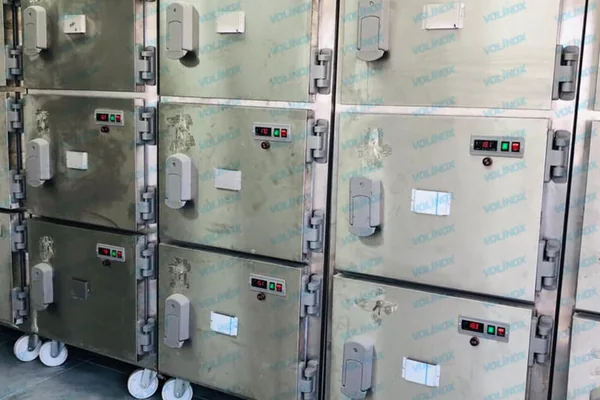
Morgue Refrigerator Temperature: Ranges, Monitoring and Alarms
Typical morgue refrigerator temperatures for short and long-term storage, and how to monitor, log and protect them with alarms and maintenance.
Read more